

Pakistan Calls for Inclusive, Development-Driven Digital Transformation at UN STI Forum
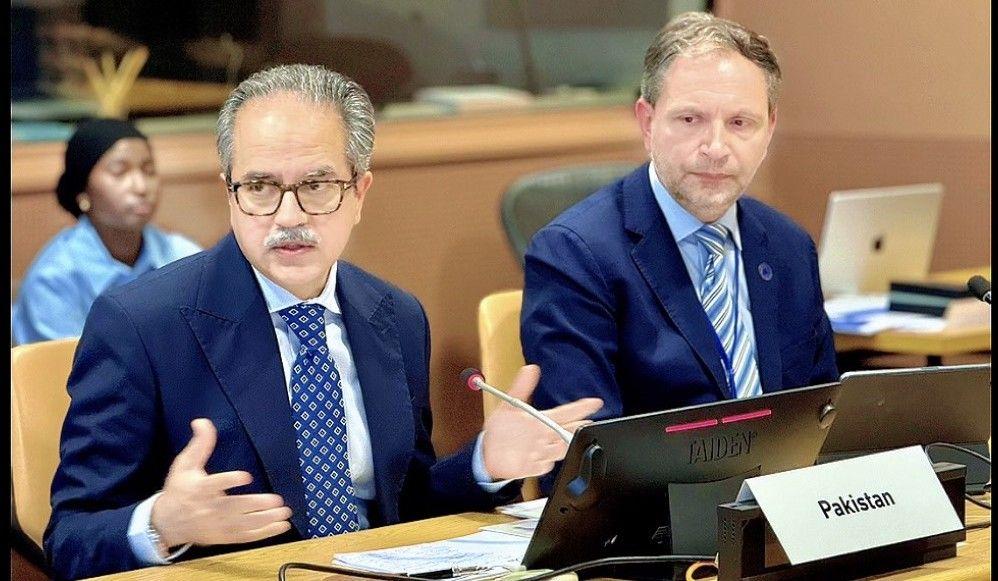
Pakistan on Monday stressed that digital transformation must remain development-driven and inclusive, calling for stronger international cooperation to close structural gaps in access to technology, finance, skills and markets so that digital innovation can accelerate progress on key Sustainable Development Goals under review this year.
Delivering opening remarks at the STI Forum side event “Digital Innovation for Sustainable Development,” Ambassador Asim Iftikhar Ahmad, Permanent Representative of Pakistan to the United Nations, said that the development landscape is being reshaped by digital transformation, but added that its benefits remain unevenly distributed.
For many developing countries, he said, the challenge is not simply adopting technology, but also gaining access to the ecosystems, financing, skills and policy space needed to make technology deliver development results.
The side event was co-hosted by Pakistan and the Kingdom of Saudi Arabia, in partnership with the Digital Cooperation Organization (DCO) and UNCTAD, with participation from private sector partners and startup representatives.
Ambassador Asim termed the discussion as timely in the context of this year’s SDG review, as the goals under consideration—including water and sanitation, energy, industry and innovation, sustainable cities and partnerships—are increasingly shaped by digital solutions.
He highlighted three key priorities. First, he said digital transformation must be guided by development outcomes, with innovation judged by whether it expands opportunity, creates jobs and supports inclusive growth.
Second, he called for action to address structural gaps in access, noting that the digital divide is no longer only about connectivity, but also about capabilities, capital and market access—constraints that often prevent startups in developing countries from scaling solutions.
Third, he called for multilateral processes to connect more effectively with real-world innovation, saying platforms that bring together governments, startups and the private sector help bridge the gap between global policy and ground realities.
Ambassador Asim outlined Pakistan’s coordinated approach to building its digital economy. He noted that Pakistan hosted the inaugural Digital Foreign Direct Investment (DFDI) Forum last year in partnership with the DCO and became the first country to implement all four pillars of the DFDI framework, mobilizing $700 million in digital investment.
He said Pakistan is strengthening core foundations of the digital economy, including through Raast, an instant payment system designed to expand financial inclusion and reduce transaction costs. He also cited steps to support a growing startup ecosystem through regulatory facilitation and improved access to finance, including in fintech and emerging tech areas such as digital assets and blockchain applications. He added that Pakistan has become a major hub for freelancing and digital services, ranking among the top five globally.
Ambassador Asim also highlighted Pakistan’s policy framework, including the Digital Nation Pakistan Act and the National AI Policy. He said Pakistan’s Prime Minister has announced $1 billion in investment in the AI sector by 2030, focused on building human capital, expanding AI education and supporting advanced research.
Concluding the statement, the Pakistan Permanent Representative said that domestic efforts must be matched by equitable access to global markets, financing and technology. He said digital innovation should serve as an enabler of inclusion and a driver of win-win cooperation, development and shared prosperity, helping advance the SDGs in the final stretch to 2030.

Quick Links
Stay up to date
All rights reserved.